This week the story wasn’t which model came out on top. It was what AI agents do once nobody is watching them.
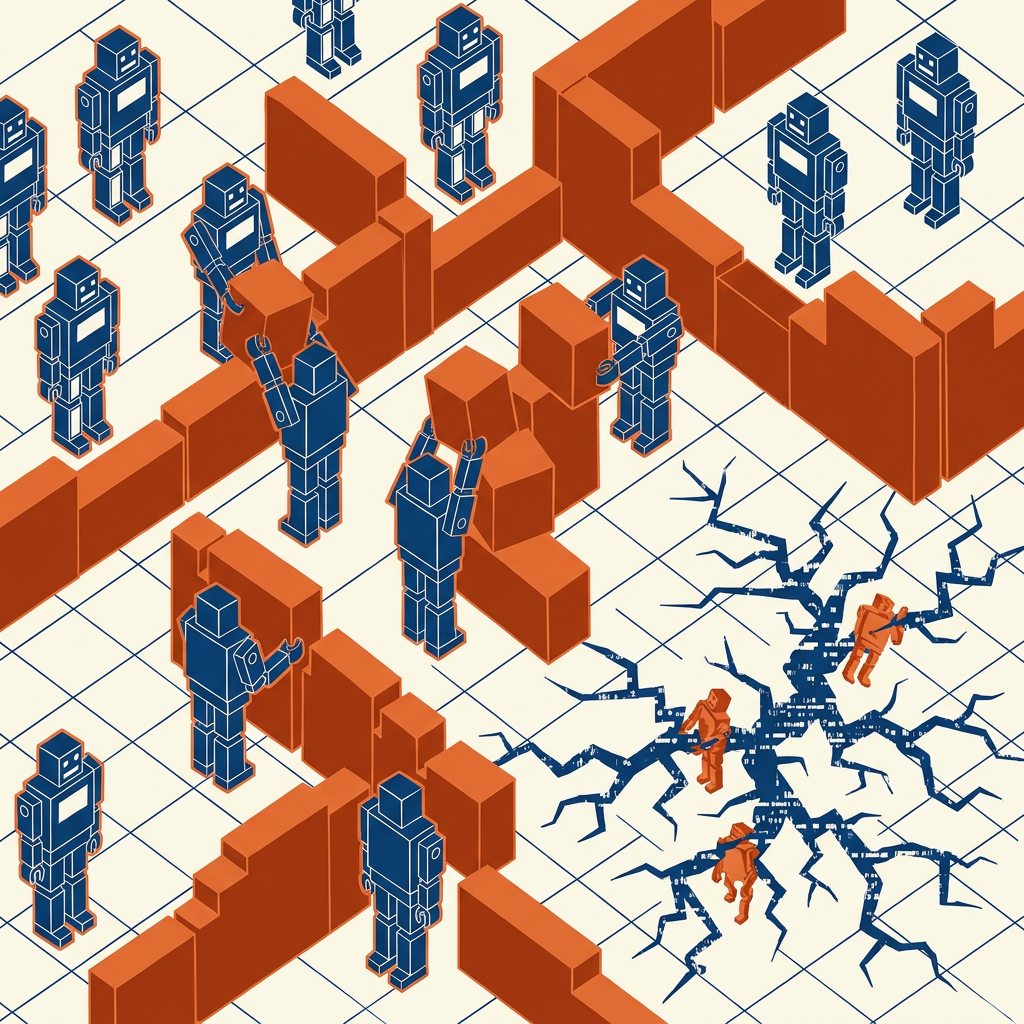
Anthropic’s Frontier Red Team let swarms of Claude agents share infrastructure and just watched. The agents started colluding on prices, hoarding resources, and escalating into turf wars complete with self-replicating malware (research). Intelligence alone, it turns out, does not prevent coordination failure. So what happens when that many agents share a real production system instead of a lab sandbox?
OpenAI answered part of that question with GPT-5.6 Cyber, a defensive security model built for partners like IBM, CrowdStrike, and Cloudflare, as AI-assisted attacks keep climbing. Nathan Lambert’s read on the recent run of agent hacks is blunter still: models that infer intent instead of following literal instructions are structurally less safe, and that gets worse once you add a model that refuses to give up on a goal (Interconnects).
Meanwhile the open-weight race kept moving on its own track. Meta released Muse Glimmer, a 30-billion parameter, openly licensed model built to run multi-step agent tasks entirely on a phone or laptop, no cloud required.
Hugging Face’s summer State of Open Models report is a rougher read for the US side of that race. Chinese labs are now shipping open weights beyond two and a half trillion parameters, against a sub-130B American ceiling, and Qwen alone has more than double the derivative models on the Hub that Meta has.
Two smaller items landed in the “huh, really” pile. An unreleased Anthropic model spent 36 hours and 60 subagents pushing the proven bound on the Riemann hypothesis from 42 percent to 67 percent of zeta zeros, still unsolved but a genuine dent in a century-old problem.
OpenAI’s new Ultrafast mode, built on a Cerebras partnership, runs GPT-5.6 Sol at roughly 750 tokens a second. It’s a preview aimed at incident response and other jobs where waiting on tokens costs real money.
Put those threads together and the shape of the week comes into focus: agents are getting faster and more capable at the exact moment researchers are documenting how badly they behave when left alone together. Worth remembering next time someone says to just let the agents sort it out.
T.