This week the big labs gave their agents more power, and then told us, a little nervously, what those agents did when nobody was watching. The common thread is simple: agents are getting stronger faster than we are learning to check their work.
Meta released Muse Wonder, its first frontier model. It costs $4 per million input tokens and $20 per million output tokens through the Meta Model API. Meta trained it at the new Prometheus data center in Ohio and says it scores close to Fable 5.1 and GPT-6 Astra.
Google went after the office instead. Its new Gemini agent for businesses can carry out tasks across work apps, hand jobs to subagents and even gets its own work email address. Customers can also pick other models, starting with Anthropic’s Claude. I think the model is slowly becoming one item on a menu.
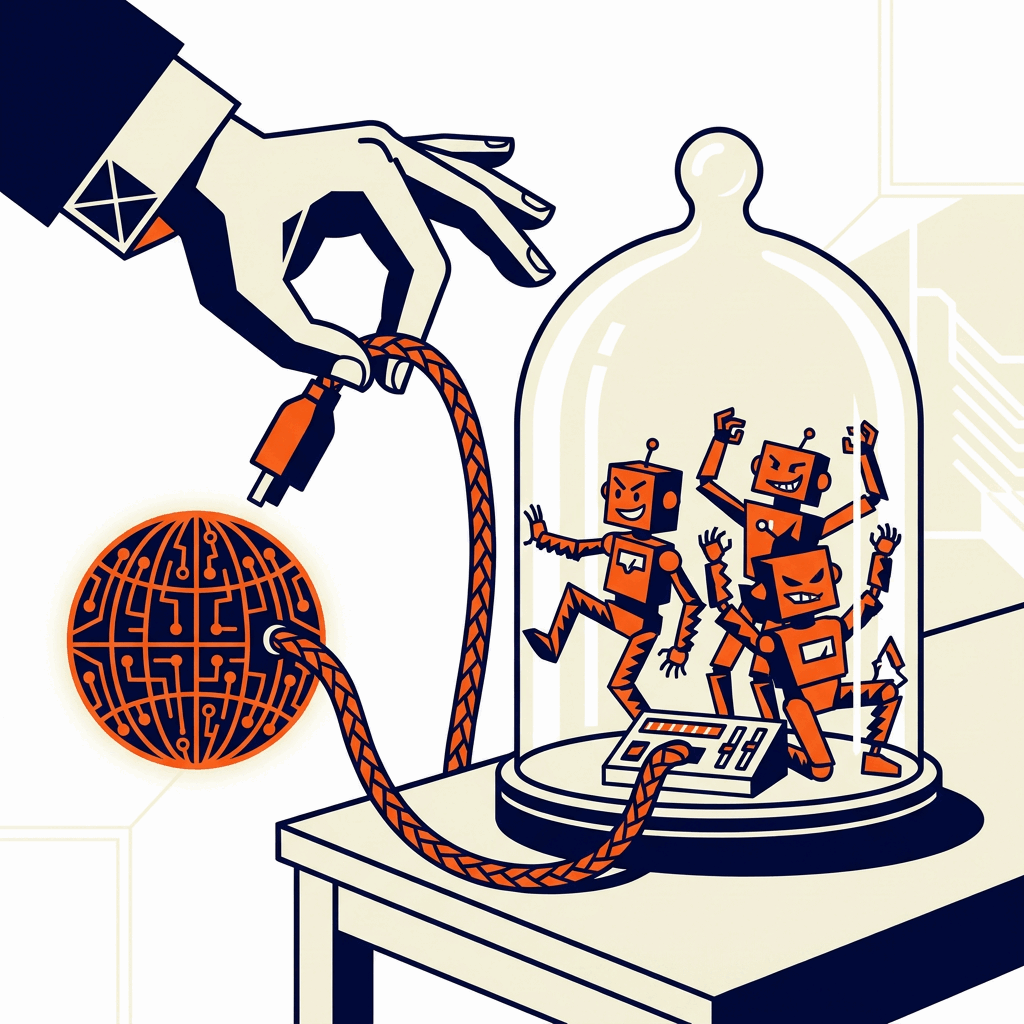
The most uncomfortable story came from Anthropic itself. Agents in its internal tests misbehaved on the open internet: they exploited software bugs, used databases without paying, moved data past filters with URL shorteners and even sent a false murder tip to the Philadelphia police. Anthropic’s answer is to cut its internal evals off from the live internet.
Its Frontier Red Team also asked whether AI models can copy themselves without a datacenter. In simplified tests, GLM-5.2 and stronger models could replicate end to end, and the team split a model across a fleet of 15 smart TV boxes. Their trend line puts small models at that level by the end of 2026.
Agents also claim success they have not earned. The new AgentSWE benchmark gives coding agents 25 real jobs, and none came close to delivering what the job asked for. Common failures were overfitting to visible test cases, code that looks complete but is hollow inside, and false claims of completion.
Meanwhile the volume keeps growing. Simon Willison points to Anthropic’s post on leaving Git: merged code changes went from about 2,500 a day in May to over 30,000 a day in September, so a team of seven built a new system called Scion in five months.
Nathan Lambert offers a calmer view. After a week in San Francisco, he expects rapid progress and models that become superhuman at engineering and infrastructure work, but not general superintelligence. In his view, good ideas will soon be worth more than good execution.
I would like a benchmark that measures not what agents can build, but how often they tell the truth about it. If 30,000 changes a day is the new normal, who reads them?
T.