This week was about the bill. OpenAI’s CFO told Bloomberg the company may need to raise more money on top of the $122B round that closed in March, because the compute crunch is getting worse, not better. Anthropic answered the same problem differently: a new agreement with Amazon for up to 5 gigawatts of training and inference capacity, with Trainium2 racks coming online this half and Trainium3 capacity by year end. Two companies, one math problem.
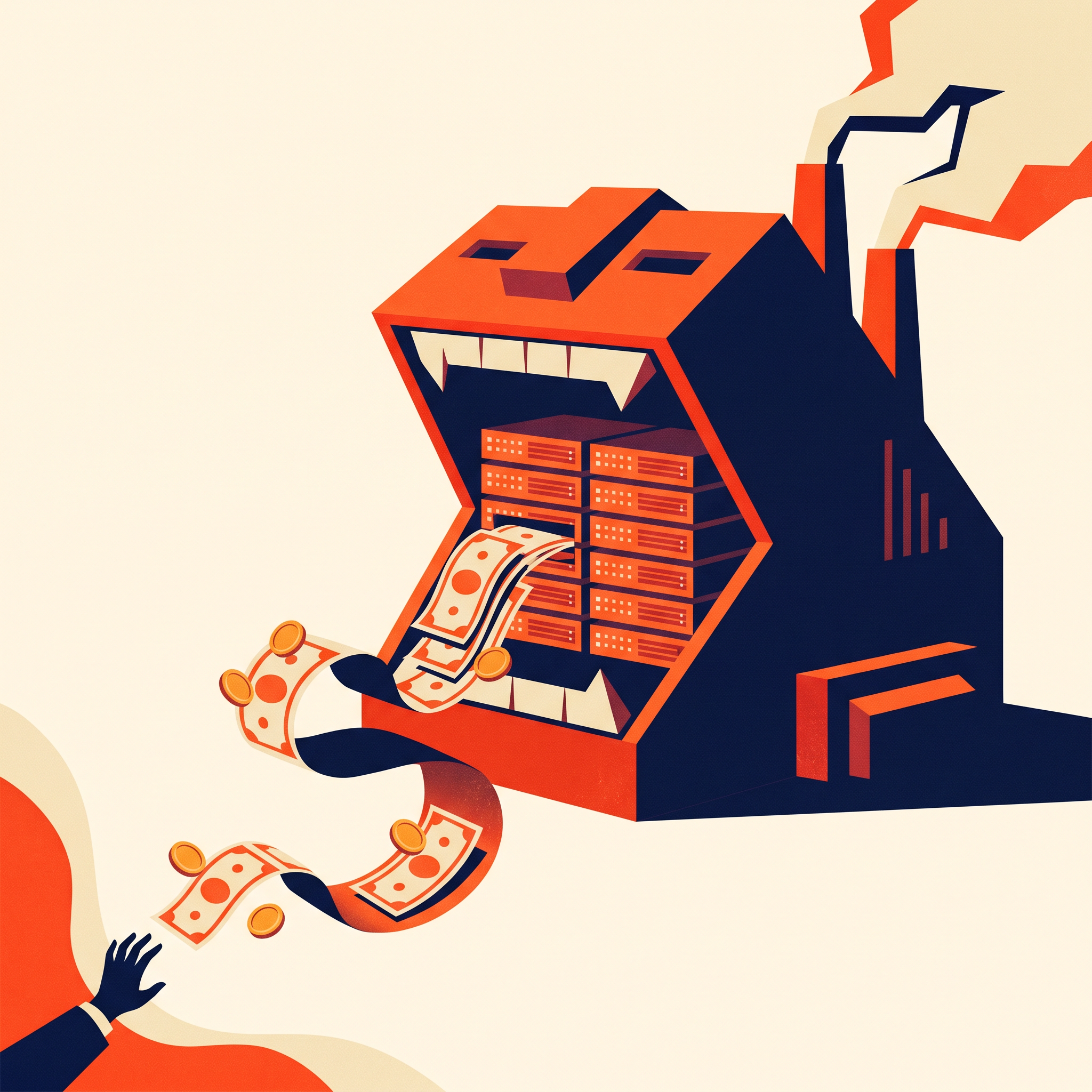
Bloomberg reported on Thursday that Friar said another round is possible, six weeks after closing the largest private fundraising in history. The post-money valuation sits at $852B, ChatGPT has 900 million weekly users, and revenue is around $2B a month, but it is still not enough to feed the data centers. If you wanted a single line to summarize 2026 in AI, that might be it.
Anthropic spent the week writing checks too, just a different kind. The lab partnered with the Gates Foundation on a $200M commitment over four years for global health, education, and economic mobility, with specific work on polio, HPV, and smallholder agriculture. It is the most concrete answer I have seen yet to the “what is all this for” question. On the model side, OpenAI shipped GPT-5.5 Instant as the new ChatGPT default, with internal evals showing 52.5% fewer hallucinated claims than GPT-5.3 on high-stakes medical, legal, and financial prompts. The number sounds great, the methodology is internal, so wait for outside benchmarks before celebrating.
Two pieces of commentary stood out. Nathan Lambert argues that open model ecosystems compound, because most of the cost of a frontier model is R&D, not the final training run, and shared open work spreads that cost across a whole ecosystem. He thinks China’s labs benefit from this structurally. Simon Willison wrote a piece about lock-in that mostly agrees, noting that swapping between Claude, GPT, and Gemini in his own tooling has become surprisingly easy.
So the picture this week: the labs need more power than money can easily buy, they are starting to spend on things that look like actual public good, and the models keep getting better at the boring stuff like not making things up. I think the lock-in question is the one to watch. If models really are becoming interchangeable, the moat shifts from weights to compute and distribution, which is exactly the game the big checks are paying for.
T.