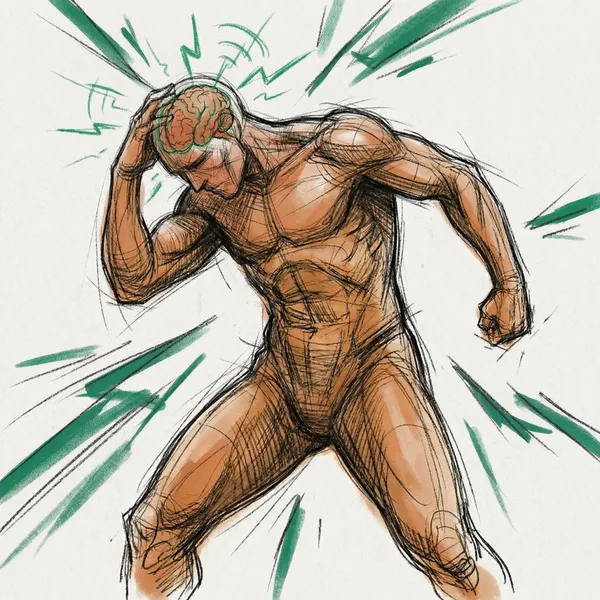
In the last article we talked about dopamine and how it drives wanting, not pleasure. Scrolling your phone floods the system with tiny dopamine hits until your baseline drops and nothing feels satisfying anymore. But there is a related system that gets triggered alongside dopamine, one that is even older and more urgent.
It is the system that decides whether you live or die. And it fires constantly, over things that cannot actually kill you.

THE MECHANISM
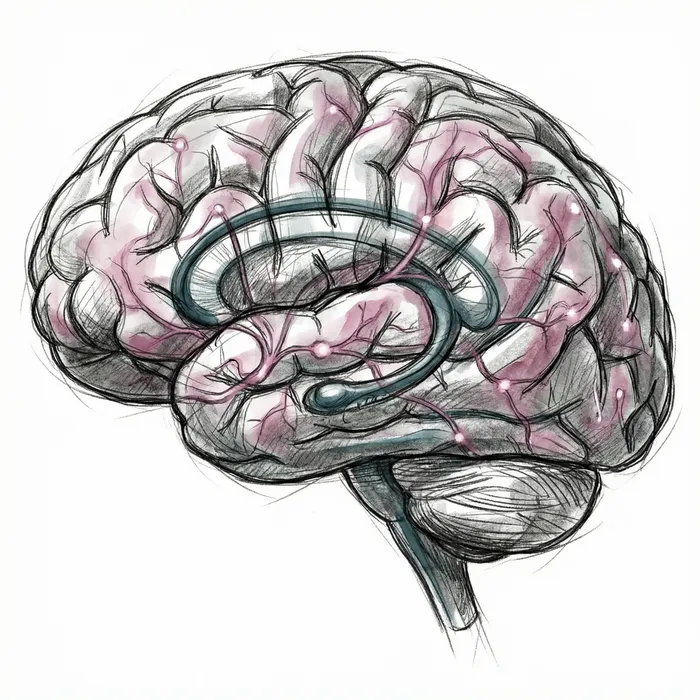
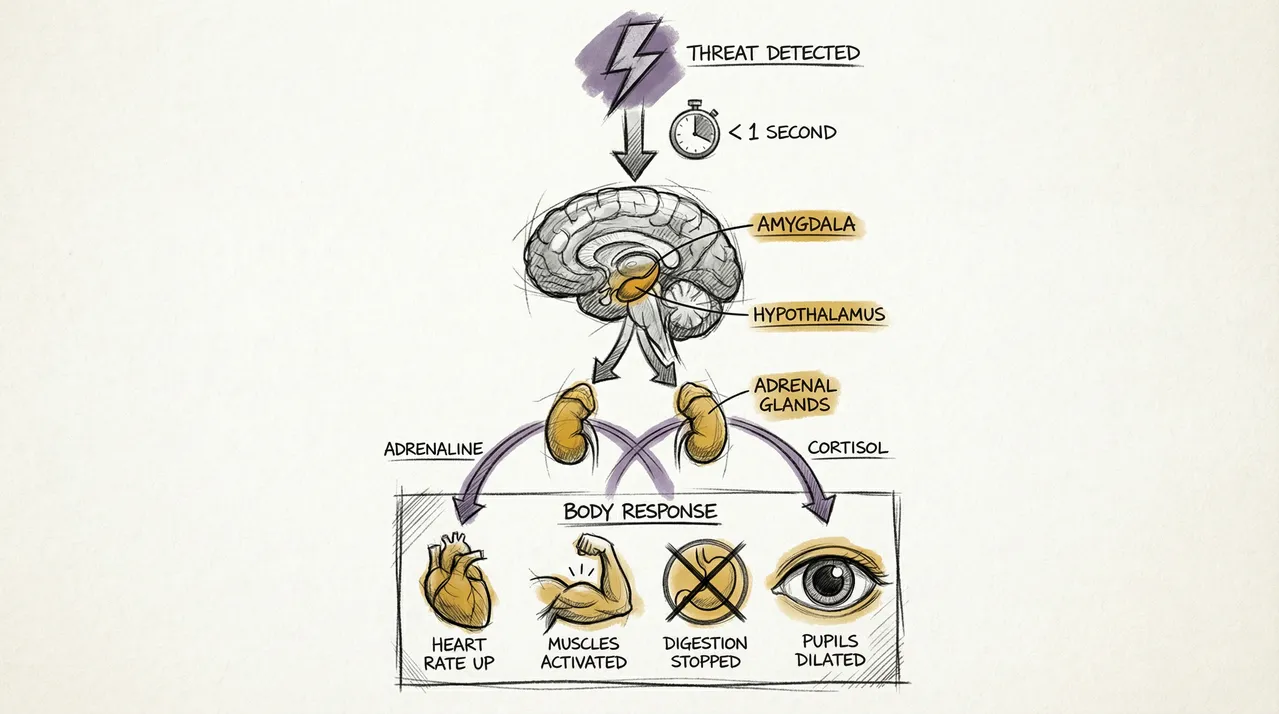
THE AMYGDALA. Two small, almond-shaped clusters of neurons sitting deep in your brain. Their job is threat detection, and they are incredibly fast. Before your conscious mind knows what is happening, the amygdala has already scanned the scene, found something suspicious, and sent out an alarm signal.
It does not wait for a full analysis. It acts first and asks questions later.
When the alarm fires, your hypothalamus tells your adrenal glands to dump adrenaline into your bloodstream. Your heart rate jumps, your breathing speeds up, and blood moves away from your digestive system toward your large muscles. Your body stops caring about long-term projects like digestion and immune response. It wants to survive the next thirty seconds.
Think of it like a building’s emergency protocol. When the fire alarm goes off, the elevators shut down, normal operations stop, and every resource goes to getting people out. Your body does the same thing: it redirects everything toward immediate survival and shuts down anything that can wait.
Cortisol follows shortly after adrenaline, released more slowly but lasting longer. It keeps the system on alert, raises blood sugar for quick energy, and suppresses whatever the body considers non-essential during a crisis. The whole cascade, from amygdala to full activation, takes less than one second.
WHY IT EXISTS
This response evolved over millions of years for one reason: predators. When your ancestor heard a rustle in the grass, there was no time to think. The brain needed to react before the lion got close enough to make thinking irrelevant.
The amygdala works like a smoke detector in a kitchen. It goes off when you burn toast, not just when there is a real fire. That is not a design flaw. A detector that waited for certainty before alarming would be useless, and your amygdala would rather fire ten times unnecessarily than miss once.
A false alarm costs you some wasted energy. Missing a real threat costs you your life. Evolution tuned the system to be jumpy.
The problem is that the world changed faster than evolution could track. We no longer face lions. But the amygdala scans for threats using the same old criteria: sudden movements, loud sounds, hostile faces, signs of social rejection. And now your environment includes a phone delivering millions of pieces of content that compete for your attention.
HOW THEY USE IT AGAINST YOU
This is the part I think people do not talk about enough. The fight-or-flight response is not just something that happens to you randomly. There are entire industries built on triggering it on purpose.
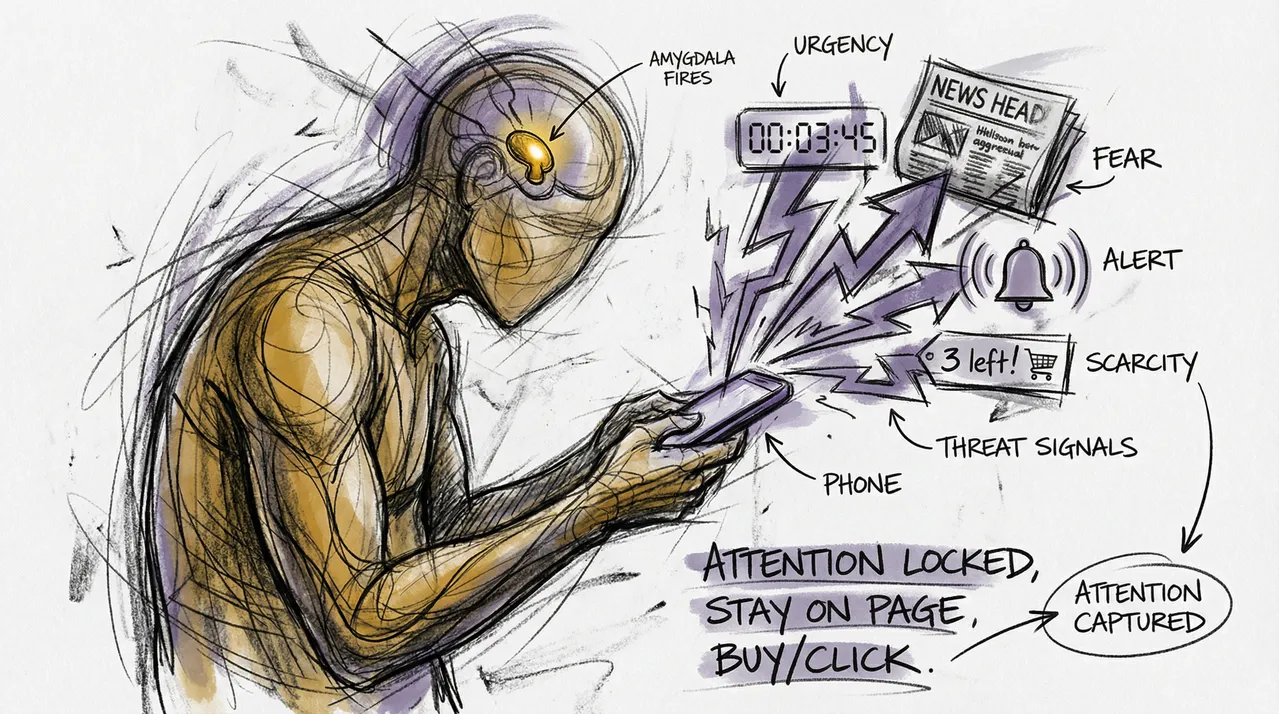
News media discovered long ago that fear and outrage keep people watching. A headline designed to make you anxious gets more clicks than a calm, balanced one. Social media algorithms optimize for engagement, and anger and fear produce more engagement than calm satisfaction.
Ever notice how sales always have a countdown timer? “Only 3 left in stock” and “offer expires in 2 hours” are not information. They are threat signals designed to trigger scarcity panic in your amygdala. You buy before your prefrontal cortex can ask whether you actually need the thing.
My take is that this is one of the most underappreciated problems of our current media environment. These companies do not accidentally stress you out. They engineer repeated threat activation, because a brain in mild threat-mode keeps paying attention.
Every notification is a small signal that something important might be happening and you might be missing it. Your amygdala fires, attention locks in, and you stay on the page.
WHAT CHRONIC ACTIVATION DOES
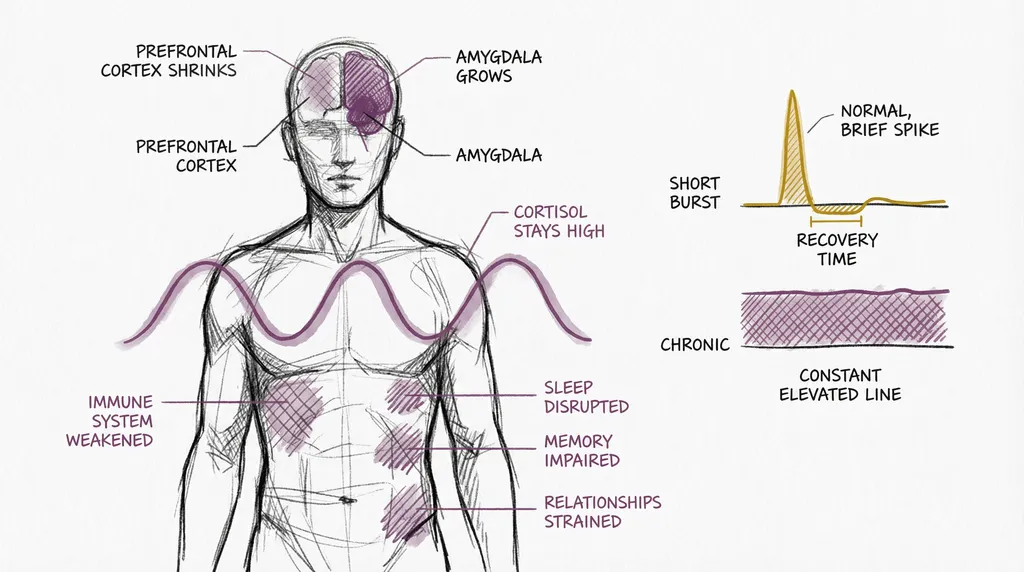
The fight-or-flight response evolved for short bursts. You run from the predator, the threat passes, cortisol drops, your body recovers. The whole thing might last a few minutes.
But what happens when you read alarming news in the morning, sit in a stressful meeting at noon, scroll outrage content in the evening, and lie awake worrying at midnight? The system never fully resets.
Chronic cortisol elevation does real damage. It impairs memory formation because your hippocampus, which builds memories, is very sensitive to cortisol. It weakens immune function and disrupts sleep. Over time, it actually shrinks the prefrontal cortex while making the amygdala more reactive.
Imagine running your car engine at redline for hours instead of seconds. The engine is not designed for that. Components wear out, overheat, fail. Your stress system works the same way: short bursts are fine, but constant activation breaks things down.
You get more anxious and less able to think clearly at the same time. That is a bad combination.
Relationships suffer too. When your brain runs in chronic threat-mode, it reads neutral facial expressions as hostile and interprets ambiguous messages as attacks. The people closest to you get a version of you primed for conflict, not connection.
WHAT YOU CAN DO ABOUT IT
The most useful thing is simple: recognize when the system has fired. You cannot stop the amygdala from triggering. It is faster than conscious thought. But you can notice the physical signals: chest tightens, breathing gets shallow, thinking narrows, urgency that does not match the situation.
Slow, deliberate breathing is not a wellness cliche. It works through physiology. Your vagus nerve connects your breathing to your heart rate, and slow exhales activate the parasympathetic nervous system, the part that tells your body the threat is over.
Four counts in, six counts out. A few cycles of that genuinely shift the hormonal balance.
If you notice that a particular news source, social media platform, or even a group chat consistently leaves you feeling anxious, the signal is real. Your amygdala is responding to something. The question is whether the thing is actually dangerous or whether someone is just good at making it feel that way.
I think the single most useful shift is deciding that your threat response is information, not instruction. Feeling anxious does not mean the thing is actually dangerous. It means your amygdala pattern-matched against something and pulled the alarm. You can feel the alarm and still pause before acting on it.
That pause is where rational thinking lives. It is not a large space, but it is yours.
T.
References
-
The Amygdala and Fear Processing - Research review covering amygdala function in threat detection, fear conditioning, and the speed of the threat response relative to cortical processing.
-
Effects of Stress and Cortisol on Memory - Study documenting cortisol effects on hippocampal memory formation and the relationship between chronic stress and cognitive decline.
-
The Stress Response and the Nervous System - Overview of the HPA axis, adrenaline and cortisol release, and the physiological cascade during acute stress.
-
Social Media and the Amygdala - Analysis of how digital environments engage threat-detection systems to drive attention and behavioral engagement.